Tile waterproofing across San Diego County
Tile and grout are not waterproof, and every shower, wet room, and tiled bathroom floor depends on a waterproofing membrane installed under the tile to protect the structure behind it. We connect San Diego homeowners with insured local tile setters who install the membrane correctly before any tile goes up, because a shower that leaks behind the wall is always more expensive than getting the membrane right the first time.
What's included in this service?
- Remove existing shower tile and backer board to expose the studs or concrete substrate before membrane installation
- Install sheet membrane (Schluter Kerdi, Wedi, or equivalent) on shower pans and walls, overlapping seams and taping corners
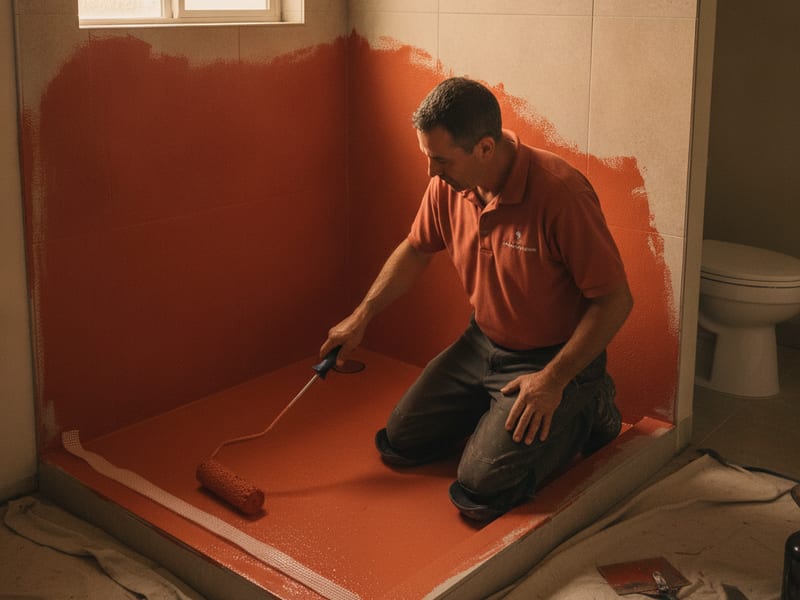
- Apply liquid-applied membrane (Laticrete Hydro Ban, RedGard, or equivalent) on shower pans, walls, and wet-room floors with the required number of coats
- Install foam board waterproofing systems (Schluter Kerdi-Board, Wedi Board) that replace backer board and membrane in a single panel
- Flood-test the shower pan after membrane installation and before tile is set to confirm the system holds water
- Coordinate waterproofing work with the tile setter who will follow on with the tile installation
When do you need this service?
- Your shower is leaking behind the wall or into the subfloor, a clear sign the waterproofing membrane has failed or was never installed
- You are building a new shower and want the waterproofing done correctly from the start, not just a pan liner with no wall protection
- A previous bathroom remodel used backer board with no membrane or used a non-approved waterproofing product that is now failing
- You are converting a bathroom to a wet room or walk-in shower and need a full floor-to-wall waterproofing system
- Your shower tile is being reset after repairs and you want to confirm the membrane is sound before new tile goes up
What do homeowners ask about Waterproofing?
Why does a shower need a waterproofing membrane if tile is already covering the wall?
Tile and grout absorb moisture, especially at grout joints and where grout has cracked over time. Water that passes through the grout enters the backer board and framing behind the tile. Without a membrane, this moisture accumulates and causes wood rot, mold growth, and eventual structural damage. A waterproofing membrane installed before the tile creates a true water barrier between the tile assembly and the structure behind it.
What types of shower waterproofing systems are available?
The three main systems are sheet membrane (Schluter Kerdi, Wedi), liquid-applied membrane (Laticrete Hydro Ban, USG RedGard), and foam board (Kerdi-Board, Wedi Board). Sheet membrane is bonded to the backer board with thin-set. Liquid-applied membrane is rolled or painted on the substrate in multiple coats. Foam board systems replace the backer board entirely with a panel that is both structural and waterproof. Your tile setter recommends a system based on your shower design and existing conditions.
How do I know if my shower has a waterproofing membrane?
You cannot tell from looking at the tile. The membrane is under the tile and backer board. If your shower is more than 10-15 years old and grout is cracking repeatedly or you are seeing moisture or mold on the wall outside the shower, the membrane may be absent or failed. The only way to confirm is to remove tile in a test area, which your setter can do as part of the estimate process.
Do you need waterproofing for a bathroom floor outside the shower?
A waterproofing membrane on the full bathroom floor (not just inside the shower) is good practice for wet rooms and bathrooms with children, but it is not always required. Standard bathroom floors outside a shower typically use a cement backer board without a membrane. If you are building a wet room where the entire floor gets wet, or a bathroom where water routinely gets outside the shower enclosure, a full-floor membrane is the right call.
What is a flood test and should I ask for one?
A flood test involves plugging the shower drain and filling the pan with water to a set depth (typically the height of the curb or 2 inches) and leaving it for 24 hours to confirm the membrane holds water without leaking. It is the industry-standard way to confirm a shower pan membrane installation before tile goes on top. You should always ask that a flood test be performed and documented before tile is set on a new or rebuilt shower pan.
Where do we offer Waterproofing in San Diego County?
We provide waterproofing in every city and community in San Diego County. Pick your city for local climate notes and service specifics.
See waterproofing in all 67 cities
Need waterproofing in San Diego County?
Call for a free quote. Most work scheduled within the week.