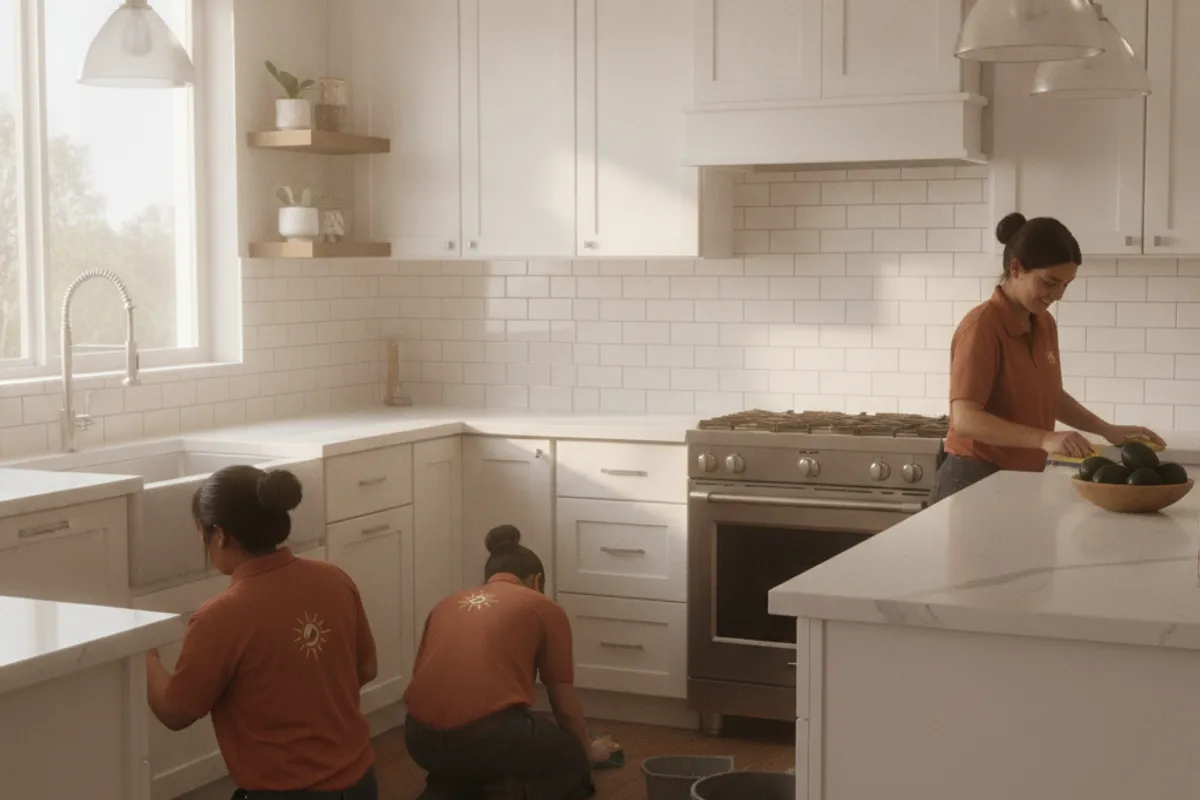
What a backsplash actually does
A backsplash tile protects the wall behind a kitchen countertop or bathroom vanity from water, grease, and cooking splatter. It is one of the most visible surfaces in the kitchen, which is why it gets more design attention than almost any other tile application. It is also one of the most manageable tile projects in scope and cost, which is why it is often the first tile project homeowners tackle in a San Diego home.
Here is what you need to know to make a smart decision on material, layout, and installation.
Material options
Ceramic subway tile is the volume choice and has been for decades. The classic 3x6 format in white with a dark grout line is durable, easy to clean, and works with almost any kitchen style from the craftsman homes in North Park and South Park to the contemporary builds in Carmel Mountain Ranch. Cost: $1-$4 per square foot for the tile, $6-$12 installed.
Porcelain is the more durable version of ceramic. For a backsplash that sees hard daily use, particularly behind a gas range or in a household with young kids who put hands on every surface, porcelain’s denser body and harder glaze hold up better than standard ceramic over time. Cost: $3-$8 per square foot for the tile, $8-$15 installed.
Natural stone mosaic (marble, travertine, slate, quartzite) is the premium end of backsplash tile. Marble hexagon or Arabescato marble subway tile reads well in the transitional and contemporary kitchens that are common in Del Mar, Encinitas, and the coastal neighborhoods. The maintenance trade-off is real: natural stone needs sealing and etches with lemon juice, tomato sauce, and many common kitchen cleaners. In a heavily used kitchen, a glossy marble backsplash is a significant maintenance commitment. Cost: $8-$25 per square foot for the tile, $14-$28 installed.
Glass tile is reflective and contemporary. It works particularly well in kitchens and bathrooms near the coast where the light-reflecting quality suits the environment. Glass tile requires a white or light gray setting bed (the color of the mortar shows through) and more precision in installation to avoid lippage that shows in the reflective surface. Cost: $6-$18 per square foot for the tile, $12-$24 installed.
Zellige tile is a Moroccan hand-cut glazed terracotta that has had significant design momentum in San Diego’s higher-end kitchen renovations over the last several years. The texture variation and depth of color are qualities that photographs well and looks genuinely distinctive in person. It requires more care in installation (the irregular thickness means back-buttering every tile individually) and the surface texture holds on to grease more than a flat-faced subway tile. Cost: $12-$30 per square foot for the tile, $18-$36 installed.
Layout patterns and what they cost
The tile you choose and the pattern you lay it in are different decisions with different costs.
Running bond (brick pattern) is the default for subway tile and adds no premium to standard installation costs. The 1/3 offset version is standard; a 1/2 offset is classic but slightly more demanding to keep level across a long run.
Stacked vertical (3x6 tile installed vertically) has a different visual rhythm from the horizontal run and reads more contemporary. Same labor cost as running bond.
Herringbone involves cutting every tile at 45 degrees and fitting them together in a V pattern. It is significantly more labor-intensive than straight lay: expect 20-35% more in labor. The pattern works well as an accent area behind a range hood rather than across the entire backsplash.
Penny tile or small mosaic on a mesh sheet is fast to install as an area accent but time-consuming to align and grout across large areas. A full kitchen backsplash in penny tile is a much longer labor job than the same square footage in 3x6 subway.
Large-format slab (a single piece of porcelain or sintered stone covering the entire backsplash without any grout joints) is the contemporary minimalist approach. It requires precise templating, a single-piece material in the right slab size, and experienced installation. It eliminates grout maintenance entirely. This approach runs $30-$80 per square foot installed for premium materials.
Installation details that matter
A backsplash is typically installed over painted drywall or existing tile. The decision of whether to tile over existing tile depends on how flat the existing tile surface is, how thick the existing tile is relative to the countertop reveal, and whether the existing tile is solid or hollow. Most contractors remove existing tile before setting new, which adds $1-$3 per square foot in demo cost.
Outlets and switches in the backsplash zone need electrical box extenders added so the box face is flush with the new tile surface. This is a minor step but one that gets skipped on rushed jobs.
The grout joint and grout color choice matter as much on a backsplash as anywhere. A dark grout with white subway tile (the classic look in many Mission Hills and Normal Heights kitchens) emphasizes the grid pattern. A matching grout color to the tile minimizes the pattern and reads more monolithic. Epoxy grout is worth considering for the backsplash area directly behind the range where grease and heat concentrate.
For a kitchen backsplash that flows into a full tile floor, see the guide on floor tile installation to understand how those two projects can be coordinated.
Cost summary for San Diego backsplash projects
- Kitchen backsplash, 30-50 sq ft, ceramic subway: $500-$1,200 installed
- Kitchen backsplash, 30-50 sq ft, porcelain: $700-$1,600 installed
- Kitchen backsplash, 30-50 sq ft, natural stone mosaic: $1,200-$2,800 installed
- Bathroom vanity backsplash, 10-20 sq ft: $350-$900 installed
- Full kitchen backsplash to ceiling, 60-80 sq ft, subway tile: $1,000-$2,200 installed
Herringbone or mosaic pattern: add 20-35% to the base labor cost.
The bottom line
For most San Diego kitchens, a 3x6 or 4x12 ceramic or porcelain tile in a classic running bond layout with a grout color that complements the countertop is a practical, durable, and good-looking choice at a reasonable cost. If design is the priority, natural stone mosaic and Zellige tile deliver something you cannot get from standard ceramic, with the maintenance trade-offs noted above.
To get connected with an insured tile crew in San Diego County, call (858) 925-5546.
How much does a kitchen backsplash cost in San Diego?
Most kitchen backsplashes in San Diego run $500-$2,200 installed depending on the tile material and square footage. Ceramic subway tile is at the lower end; natural stone mosaic and premium materials run higher.
Can backsplash tile be installed over existing tile?
Sometimes. If the existing tile is flat, solid, and not too thick relative to the countertop reveal, tiling over it is possible. Most contractors prefer removing the existing tile to ensure a flat substrate. Demo adds $1-$3 per square foot to the project cost.
What grout is best for a kitchen backsplash?
Epoxy grout is the most stain-resistant and is a good choice for the area directly behind a range where grease accumulates. For the rest of a kitchen backsplash, a quality sanded or unsanded cement grout with a grout sealer applied after curing is sufficient.