Regrouting and Resealing in Coronado, CA.
Regrouting and Resealing for Coronado homes, done by insured San Diego County tile setters. Grout fails over time from movement, moisture, and cleaning chemicals, and stained or cracked grout can make a tile surface that is otherwise in good condition look worn and neglected. We connect San Diego homeowners with insured local tile setters who remove old grout correctly, apply fresh grout in the right specification for the joint width and tile type, and seal natural stone and porous grout surfaces to protect the finished result..
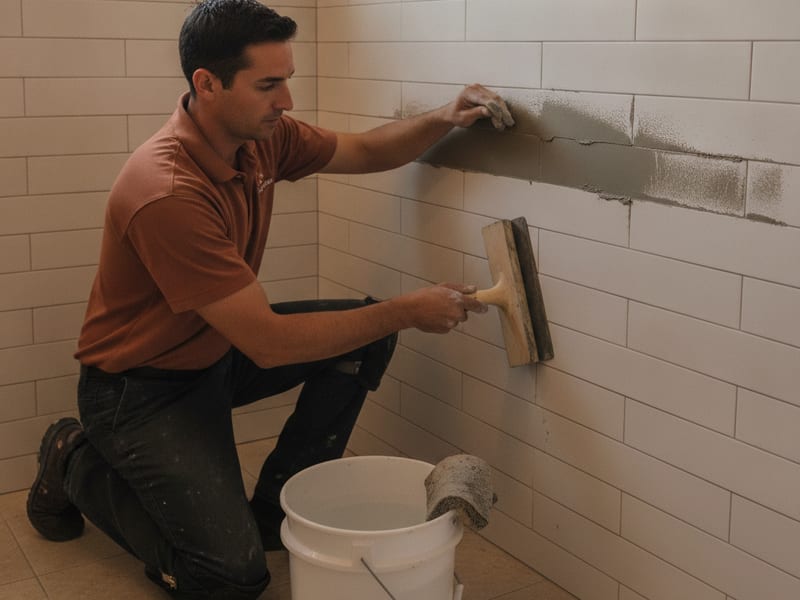
Why is regrouting and resealing different in Coastal San Diego?
Regrouting in coastal San Diego homes in Carlsbad, Encinitas, and Oceanside is a more frequent need than in drier inland areas because the constant humidity from the marine layer keeps shower and bathroom grout damp and vulnerable to mold growth and breakdown. Coastal showers that were not grouted with mold-resistant grout at installation often need regrouting with an epoxy or antimicrobial grout that holds up better in high-humidity environments. Natural stone tile in coastal bathrooms also needs resealing more frequently than inland stone because the humidity cycles accelerate moisture absorption into unsealed stone surfaces.
What's included in regrouting and resealing in Coronado?
- Remove existing grout from joints using a grout saw or oscillating tool without chipping the tile edges
- Clean the open joints of residue, mold, and old sealer before new grout is applied
- Apply sanded or unsanded cement grout, or epoxy grout, in the specification that matches the joint width and tile type
- Replace caulk at all movement joints (corners, wall-to-floor transitions, tub ledges) as part of every regrout job
- Apply penetrating sealer to natural stone tile and porous cement grout after the new grout cures
- Advise on grout color selection to match or update the existing tile for a refreshed appearance
When does a Coronado home need regrouting and resealing?
- Grout joints in a shower, bathroom floor, or kitchen backsplash are cracking, crumbling, or missing in sections
- Grout has darkened with mold or mildew that cleaning products cannot remove and you want a fresh clean surface
- You are selling your home and want the bathroom tile to look clean and well-maintained without a full tile replacement
- Natural stone tile in your bathroom or kitchen has never been sealed and is absorbing staining from everyday use
- Grout was originally applied in the wrong specification (too wide a joint for unsanded grout, or sanded grout in a narrow joint) and it is cracking as a result
What do Coronado homeowners ask about regrouting and resealing?
How fast can you get to Coronado for regrouting and resealing?
Most Coronado estimates get scheduled the same week, often within a day or two. You get a firm appointment window and a written quote before any work starts.
What does regrouting and resealing cost in Coronado?
$300-$900 for a standard bathroom regrout; larger areas and natural stone sealing priced at the estimate. Pricing is the same across San Diego County, with no mileage upcharge for Coronado. We confirm a flat-rate quote before any work starts.
How does Coronado's climate affect this service?
Coastal bay climate, mild year-round (60-75°F), persistent marine layer and salt air. Regrouting in coastal San Diego homes in Carlsbad, Encinitas, and Oceanside is a more frequent need than in drier inland areas because the constant humidity from the marine layer keeps shower and bathroom grout damp and vulnerable to mold growth and breakdown.
How do I know if my grout needs to be replaced or just cleaned?
If the grout is discolored but structurally intact, deep cleaning with a grout-specific cleaner or steam cleaning may restore the appearance without removing and replacing the grout. If the grout is cracking, crumbling, missing in sections, or repeatedly coming back moldy after cleaning, it needs to come out and be replaced. Your tile setter checks the condition at the estimate and advises on whether cleaning or regrout is the right call.
What is the difference between sanded and unsanded grout?
Sanded grout contains fine sand aggregate and is used for joints 1/8 inch and wider. The sand gives the grout strength for wider joints. Unsanded grout is smoother and used for joints under 1/8 inch, including most mosaic tile and polished stone applications. Using sanded grout in a narrow joint can scratch polished stone and glass tile faces. Your setter selects the right specification based on the existing joint width.
Need regrouting and resealing in Coronado?
Call for a free quote. Flat-rate pricing from an insured local tile setter.