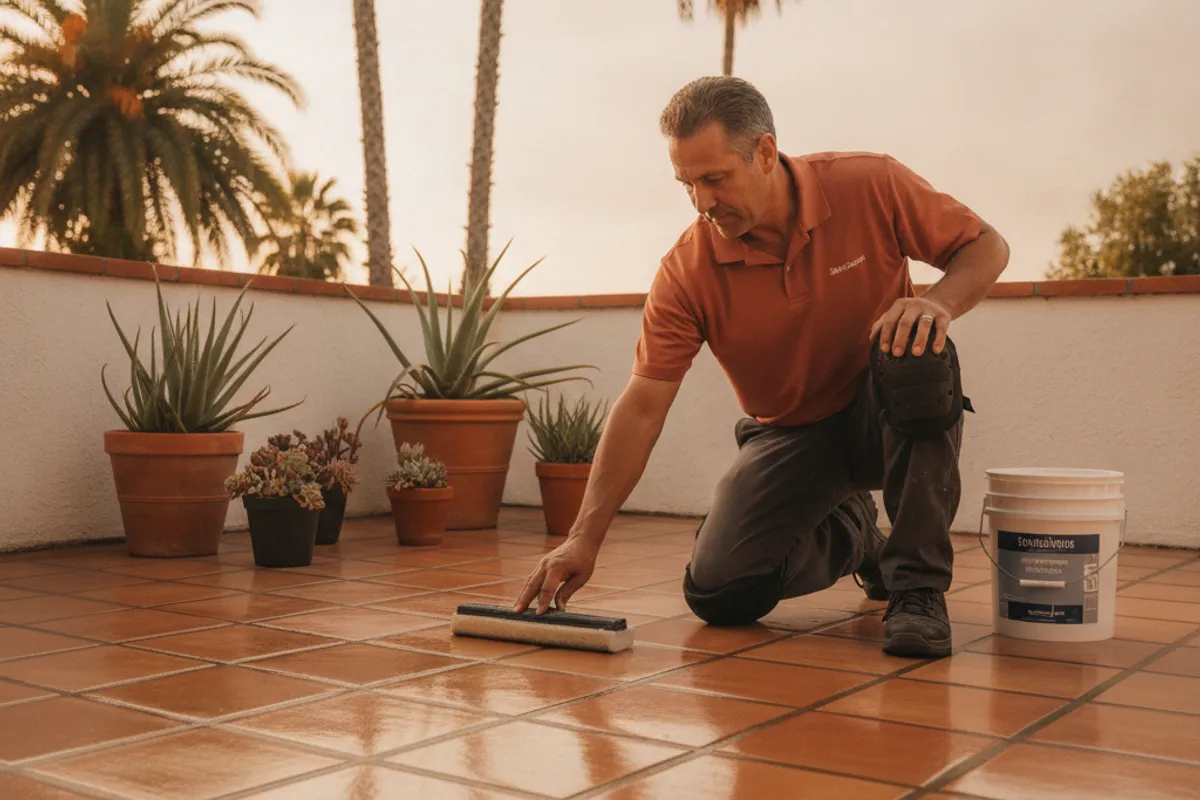
Saltillo tile in San Diego: a long history
Saltillo tile is handmade terracotta from Saltillo, Coahuila, Mexico. It has been installed in San Diego homes for well over a century, and it suits the region’s Spanish Colonial, Hacienda, and Mediterranean architecture in a way that no manufactured product quite replaces. Rancho Santa Fe estates, Mission Hills bungalows, Old Town properties, and thousands of inland valley homes from the 1940s through the 1990s have Saltillo tile in kitchens, entries, and patios.
The characteristic warm orange-red color, the slight variation in each handmade tile, and the way the surface changes over decades with wax and wear are properties that owners who grew up with Saltillo often want to preserve. Owners who inherited it with a home are sometimes less sure what to do with it.
This guide covers what Saltillo and similar Spanish-style tile needs to stay in good condition in San Diego’s climate.
What makes Saltillo different from other tile
Saltillo is unglazed terracotta fired at low temperatures. That means:
- It is highly porous, absorbing water and staining agents quickly
- It is softer than porcelain or even most ceramic
- It does not have a factory glaze protecting the surface
- The color and texture vary from tile to tile, which is normal and desirable
These properties mean Saltillo requires sealing to survive as a floor surface. An unsealed Saltillo tile absorbs cooking oil, coffee, red wine, and any liquid that hits it almost immediately. A sealed Saltillo tile repels surface liquids and is much more practical to live with.
Sealing: the most important maintenance task
Saltillo should be sealed on installation and resealed periodically. The sealing schedule depends on traffic and the sealer type:
Penetrating sealers (silane-siloxane or impregnating type): soak into the tile and protect from within without changing the surface appearance significantly. These last 3-5 years in a moderate-traffic area before resealing is needed. They are the right choice for homeowners who want to preserve the natural matte look of the tile.
Topical sealers (acrylic, polyurethane, or traditional linseed oil-based wax): sit on the surface and create a film that gives Saltillo its characteristic sheen. Traditional Saltillo maintenance used linseed oil followed by paste wax, which creates a deep amber finish that darkens with each application. Modern acrylic topcoats do similar work faster and with less labor. Topical sealers typically need reapplication every 1-3 years depending on traffic.
In San Diego’s coastal zones, the marine layer adds moisture to the air that can fog an improperly applied topical sealer. In inland zones with harder water, water spots are more visible on a high-sheen surface. Both are manageable with the right maintenance schedule.
How to tell when resealing is needed
The simplest test: drop a few drops of water on the surface. If they bead for 30 seconds, the sealer is still working. If they soak in within 10-15 seconds, the tile is ready for resealing.
For topical-sealed Saltillo, visible wear patterns in high-traffic areas (kitchen entries, front doors) where the finish has worn off are the other clear sign.
Cleaning Saltillo and Spanish tile correctly
What not to use:
- Vinegar and citrus-based cleaners: these etch the sealer and, on unsealed tile, attack the tile body itself
- Bleach: damages the sealer and can lighten the tile color permanently
- Steam cleaners on topical-sealed floors: the heat lifts topical finishes
- Heavy scrubbing with abrasive pads: scratches topical sealers
What works:
- pH-neutral tile cleaner (Aqua Mix Concentrated Stone and Tile Cleaner, Black Diamond Stone and Tile Floor Cleaner, or similar)
- Damp mop, not wet mop: excess water left on Saltillo works under the sealer over time
- Dry immediately after mopping in poorly ventilated areas
For deep cleaning before resealing, a stripper that removes the old topical finish is needed (not just a regular cleaner). The tile is then neutralized, allowed to fully dry for 24-48 hours, and then resealed. Rushing the drying time results in sealer that traps moisture underneath and appears milky.
Common Saltillo problems in San Diego homes
Efflorescence. White powdery deposits that appear on the surface, particularly near doors, in bathrooms, or on covered patios. Efflorescence is mineral salts coming up through the porous tile from moisture beneath. Treating it requires removing the source of moisture, which might mean improving drainage at an exterior door threshold or addressing a grout failure that is letting water under the tile. Surface cleaning removes the symptom, not the cause.
Cracked or spalling tile. Saltillo is soft. Heavy impact can crack it. In outdoor applications, moisture that gets into the porous tile and then expands in cold weather can cause the surface to pop (spall). San Diego rarely freezes, but the overnight temperatures in Julian, Alpine, and the mountain communities do occasionally drop below 32°F, and outdoor Saltillo in those areas is more susceptible to this.
Staining through the sealer. Oil-based stains (cooking grease, sunscreen, some cosmetics) penetrate even sealed Saltillo if left on the surface. Poultice stain removers designed for porous stone can draw these out, but it takes time and multiple applications.
Grout deterioration. Traditional Saltillo installations often used a sanded cement grout in warm tones. That grout cracks over time. Regrouting Saltillo is straightforward but requires careful grout removal with a multi-tool so the soft tile edges are not damaged.
When to call a tile crew
Saltillo restoration work that goes beyond routine cleaning and resealing includes:
- Stripping old wax buildup that has turned gray or black from embedded dirt
- Regrouting a Saltillo floor
- Replacing individual cracked tiles (matching new Saltillo to aged Saltillo is imperfect but possible)
- Outdoor Saltillo that has lifted from the substrate and needs resetting
Verify any tile contractor’s C-15 license at cslb.ca.gov before hiring them for restoration work. To get connected with an experienced tile crew in San Diego County that works with Saltillo and Spanish-style tile, call (858) 925-5546. For floor tile installation and repair services that include natural and specialty tile, see the floor tile service.
How often should Saltillo tile be sealed in a San Diego home?
For penetrating sealers: every 3-5 years in moderate traffic. For topical acrylic or wax finishes: every 1-3 years depending on traffic and how quickly the finish wears in high-use areas.
What cleaners are safe for Saltillo tile?
pH-neutral tile cleaners used with a damp mop. Avoid vinegar, citrus-based cleaners, bleach, and steam mops on topically sealed surfaces. Let the floor dry thoroughly after mopping.
Can I change the look of my Saltillo tile without replacing it?
Yes. Stripping old wax buildup and applying a fresh topical sealer can significantly change the surface appearance, from a matte penetrating sealer look to the traditional high-gloss wax finish. Color-enhancing sealers can deepen the orange tones of aged tile.