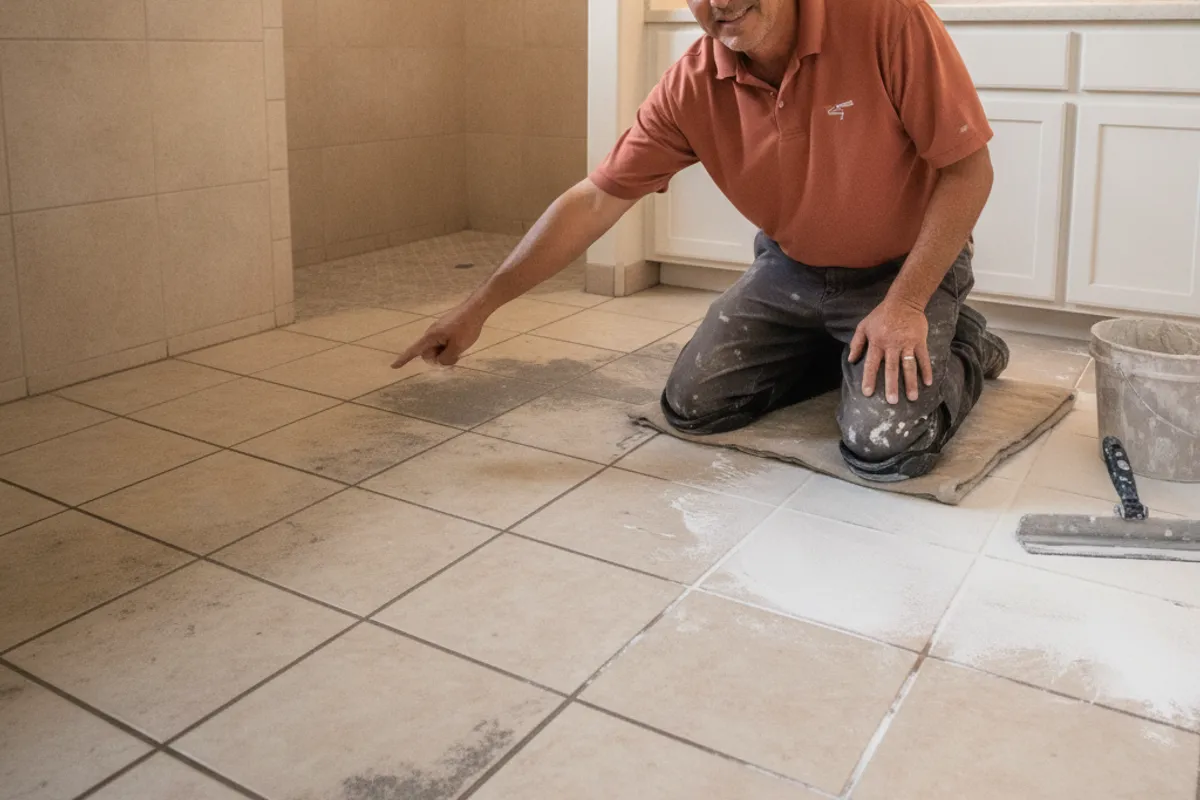
The question tile crews get asked constantly
Most tile in San Diego was laid between 1975 and 2005. That material is not necessarily worn out, but the grout around it often is. Grout cracks, stains, crumbles, and grows mildew in the marine climate of the coast and the harder water conditions inland. When homeowners see deteriorating grout, the question is always the same: regrout or replace?
The answer depends on the tile itself, the substrate under it, and why the grout failed.
When regrouting is enough
Regrouting makes sense when the tile is still in good condition. Here is what that looks like:
- Tiles are solid when tapped (no hollow sound)
- No cracked or chipped tiles
- The tile pattern has no significant movement when you press firmly on adjacent tiles
- There is no soft, spongy, or depressed area in the floor
- No evidence of water damage behind the wall (no staining above the tile line, no soft drywall at the perimeter)
If all of those are true, the problem is the grout itself. Old grout shrinks and cracks over time. Caulk at transitions (where the wall meets the floor, around the tub lip) often fails first and lets moisture in. Regrouting involves removing the old grout with an oscillating multi-tool or grout saw, cleaning the joints thoroughly, and applying new grout. Recaulking the transitions is part of the same job.
Cost in San Diego: A standard 60-square-foot bathroom tile regrout typically runs $400-$900 depending on the tile size (smaller tiles mean more joints and more labor), the grout depth, and the condition of the existing grout. Shower walls and floors together often run $600-$1,200.
When regrouting is not enough
Some grout failures are symptoms of a deeper problem. Regrouting on top of a structural or substrate issue just delays the same failure by a few years.
Replace when you find any of these:
Hollow tile. Walk the floor and tap. A dull thud instead of a solid sound means the tile has debonded from the substrate. Regrouting on a floor with hollow tiles is wasted money: the tiles will crack when someone puts weight on them.
Cracked tile. A few cracked tiles can sometimes be replaced individually, but widespread cracking usually points to substrate movement, a slab crack, or improper tile selection for the application. Crack isolation membrane should be installed before any new tile.
Water damage behind the wall. In pre-2000 San Diego homes, the original shower construction often used paper-faced drywall or no moisture barrier at all. When that liner fails, water saturates the drywall, and the tile eventually sounds hollow and wiggles. At that point, the whole shower has to come out.
Mold through the grout. Mold on top of grout comes off with cleaning. Mold that has penetrated the grout or the backer board means moisture has been getting through for a while. Regrouting over mold-infiltrated substrate does not fix the problem.
Lippage or movement. If tiles move when you press on them or the floor has significant lippage, the setting bed has failed and a regrout will not hold.
The tile replacement decision
When any of the above signs appear, the scope usually expands: demo the existing tile, inspect and repair the substrate, then install new tile with proper waterproofing. That is a complete installation project rather than a repair.
For showers, the TCNA recommends a bonded waterproof membrane system rather than the old hot-mop pan liner used in pre-1990 construction. If a shower is being opened up anyway, upgrading to a modern waterproofing system like Schluter Kerdi or a liquid-applied membrane is the right call and adds maybe $300-$600 to the project cost versus the risk of another failure in five years.
For more on what a full shower rebuild involves, see the guide to shower and bath tile.
Individual tile replacement
If only a few tiles are cracked or damaged, individual tile replacement is often possible if matching tile is available. This is the best-case scenario and saves significant money versus full replacement. Bring the damaged tile to a tile showroom and look for a match, or check the garage or attic: many San Diego homeowners have leftover tile from the original installation.
Individual tile replacement involves cutting out the damaged tile without cracking adjacent ones (a skill that varies by installer), cleaning the setting bed, and setting new tile. Cost is typically $80-$250 per tile replaced depending on the tile size and accessibility.
How to read a contractor’s recommendation
A contractor recommending full replacement on a floor that only has stained grout and solid tile is either upselling or genuinely concerned about something they are not explaining. Ask directly: what did you find when you tapped the tile? What is the condition of the setting bed? Is there evidence of moisture damage behind the walls?
A contractor recommending a regrout on a floor with hollow tile is either not inspecting carefully or trying to close a small job when the real work is larger. Tap the floor yourself before accepting that answer.
Verify any tile contractor’s C-15 license at cslb.ca.gov before work begins.
To get connected with an insured tile crew in San Diego County for an honest assessment, call (858) 925-5546.
How do I know if I need to regrout or replace my tile?
Tap the tiles. Solid sound means they are still bonded. Look for cracked tile, soft spots in the floor, and any evidence of water damage above the tile line. If the tile is solid and undamaged, regrouting is usually sufficient.
How much does regrouting cost in San Diego?
A standard bathroom tile regrout runs $400-$900 for floor tile (60-80 sq ft). A shower regrout (walls and floor combined) typically runs $600-$1,200 depending on tile size and grout condition.
Can I regrout a shower myself?
You can, but grout removal without cracking tiles requires the right oscillating tool attachment and a steady hand. The bigger risk is missing an underlying moisture problem that becomes obvious only once the old grout is gone. An experienced eye at the assessment stage can save you from a regrout that needs to be torn out six months later.