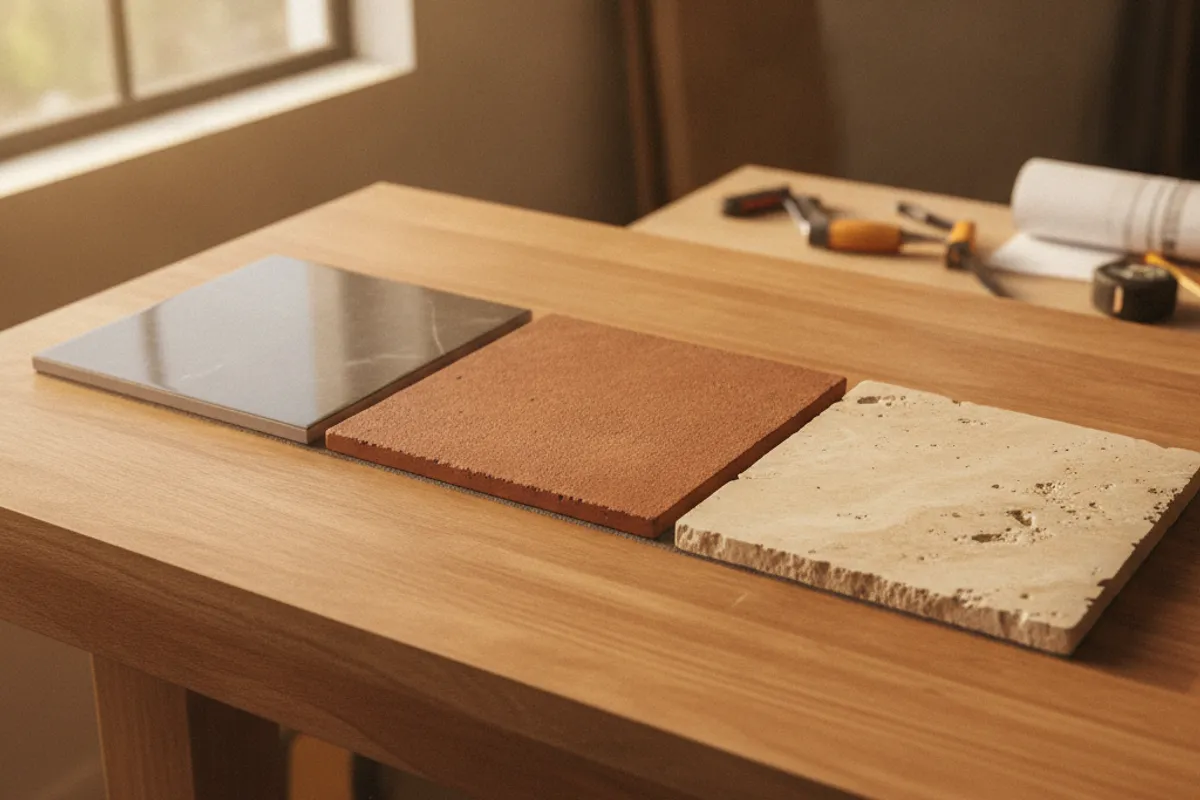
Three tile types, different strengths
San Diego homeowners asking about tile almost always face the same early decision: porcelain, ceramic, or natural stone. Each performs differently in the county’s mix of coastal salt air, inland heat, and the active indoor-outdoor lifestyle that most households here actually live.
Here is a straight breakdown of how they compare.
Porcelain
Porcelain is a denser, harder version of ceramic. It is fired at higher temperatures, which drives the water absorption rate below 0.5%, compared to ceramic’s 3% or higher. That density is the reason porcelain dominates outdoor applications, shower floors, and any area that sees heavy foot traffic in San Diego homes.
Where it works best in San Diego: Outdoor patios, pool decks, shower floors, bathroom floors, and kitchens. The low absorption rate makes it resistant to the staining that plagues natural stone in a busy household. In coastal areas from La Jolla to Oceanside, porcelain handles the salt air without the surface degradation that affects some natural stones.
Cost: $4-$12 per square foot for the tile, $10-$22 installed. Rectified porcelain (precision-cut edges for thin grout lines) runs toward the top of that range.
Maintenance: Sweep and mop. No sealing required for most glazed porcelain. Unglazed or matte-finish porcelain may need periodic sealing.
Watch out for: Large-format porcelain (24x24 and larger) is heavy and requires a more precisely flat substrate. Lippage (one tile edge higher than the next) is more visible with large-format tiles, so the substrate and setting work matter more. See the guide on large-format tile installation for what that prep involves.
Ceramic
Ceramic tile is the most affordable option and still the right call for plenty of applications. It is softer than porcelain, which makes it easier to cut and faster to set. The glaze on top provides a durable surface for walls and moderate-traffic floors.
Where it works best in San Diego: Bathroom walls, backsplashes, laundry rooms, and light-duty floors. Classic 3x6 subway tile is ceramic. Zellige-style handmade tiles are ceramic. Most of the decorative wall tile you see in design magazines is ceramic.
Cost: $1-$5 per square foot for the tile, $6-$14 installed.
Maintenance: Sweep and mop. Glazed ceramic does not need sealing. Grout does.
Watch out for: Ceramic is more susceptible to chipping than porcelain, particularly on exposed corners. In high-traffic areas or outdoor applications, ceramic will not hold up as well over time. Do not use standard ceramic tile on outdoor San Diego patios where freeze-thaw is not a concern but where heavy furniture, foot traffic, and UV exposure are.
Natural stone
Natural stone covers a wide category: travertine, marble, slate, limestone, quartzite, and granite each have different properties. What they share is that they are cut from real stone, which means no two tiles are identical and the surface is porous to some degree.
Where it works best in San Diego: Primary bathrooms with a spa aesthetic, formal entryways, and accent walls. Travertine is a long-running favorite in San Diego, especially in the older ranch homes in Rancho Bernardo, Poway, and the inland valleys where the warm tones suit the architecture. Marble works well in primary baths and is common in the high-end custom homes in Del Mar and Rancho Santa Fe.
Cost: $8-$25 per square foot for the tile, $18-$40+ installed. Premium marbles and exotic stones go higher.
Maintenance: All natural stone requires sealing on installation and re-sealing every one to five years depending on the stone and the use. Travertine has natural holes and pits that are usually filled with grout or epoxy. Marble etches with acidic cleaners, coffee, and citrus. That matters in a San Diego kitchen.
Watch out for: Porous stone in a shower needs proper waterproofing underneath and diligent sealing. In the marine environment near the coast, some softer stones absorb salt moisture at the surface over years. Slate and quartzite are harder and more suitable for outdoor applications than travertine or marble.
The San Diego climate factor
San Diego’s climate varies more than most people expect. Coastal neighborhoods (Pacific Beach, Ocean Beach, Solana Beach) have marine layer, salt air, and moderate temperatures year-round. Inland valleys (El Cajon, Santee, Ramona) can swing from 40°F in winter to 110°F in summer. The backcountry sees occasional frost.
What this means for tile: outdoor tile in the inland valleys needs to handle more thermal expansion and contraction than coastal tile. Natural stone patios in Ramona or Alpine need closer attention to substrate prep and joint sizing than the same project in Encinitas. Porcelain generally handles these swings better than ceramic or natural stone.
How to choose
Ask three questions:
- Where is the tile going? Wet area, outdoor space, or interior dry area?
- How much foot traffic will it see, and from what (adults, kids, pets)?
- How much maintenance are you willing to do?
For wet areas and outdoor spaces: porcelain is the default for good reason. For wall tile and light-duty floors where design is driving the decision: ceramic gives you the most options at the lowest cost. For a spa primary bathroom or a formal entry where the material itself is part of the design: natural stone is worth the cost and the maintenance if you will take care of it.
For help matching tile type to your project and getting connected with an insured crew in San Diego County, call (858) 925-5546.
Is porcelain or ceramic tile better for a San Diego bathroom?
Porcelain is the better choice for shower floors and high-moisture areas because its low water absorption rate makes it more resistant to damage and staining. Ceramic is fine for bathroom walls and is the most common choice for subway tile backers and decorative wall applications.
Does natural stone tile require more maintenance in San Diego’s coastal climate?
Yes. Salt air accelerates surface degradation on some softer stones. Natural stone near the coast should be sealed more frequently and kept cleaner. Travertine and marble in a coastal bathroom need annual sealing at minimum.
Which tile is easiest to maintain in a busy San Diego household?
Glazed porcelain is the lowest-maintenance option. It does not need sealing, handles moisture well, and does not etch with household cleaners. Ceramic glazed tile is similar for wall applications. Natural stone requires the most ongoing care.