Porcelain and Ceramic in Alpine, CA.
Porcelain and Ceramic for Alpine homes, done by insured San Diego County tile setters. Porcelain and ceramic are the most common tile materials in San Diego homes, and getting them right depends on matching the tile to the substrate and application. We connect homeowners with insured local tile setters who understand the difference between setting a standard 12-by-12 ceramic floor and installing a 24-by-48 rectified porcelain slab, and who prep accordingly..
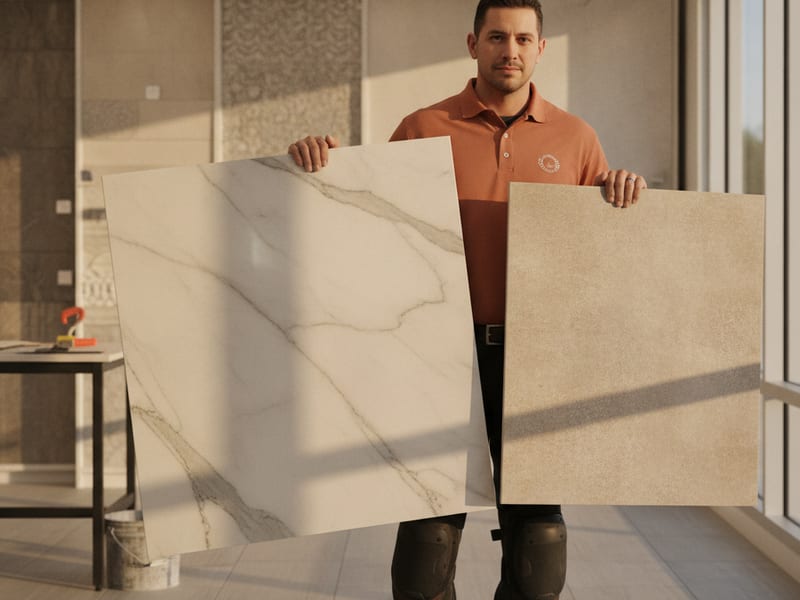
Why is porcelain and ceramic different in East County San Diego?
Porcelain tile in East County holds up to the heat and temperature swings better than natural stone in most interior applications, and through-body porcelain that reads consistent color through the body of the tile is a good choice for high-traffic areas in these homes. Older ceramic tile in El Cajon and Santee bathrooms from the 1960s and 1970s is often set in a thick mortar bed that requires more demolition effort than modern installations, and the cost of substrate removal and prep needs to be included in the estimate for these projects. Large-format porcelain is increasingly popular for East County living areas and has replaced much of the carpet that was standard in these homes.
What's included in porcelain and ceramic in Alpine?
- Assess subfloor or slab flatness and apply leveling compound before setting large-format porcelain where the flatness standard is tighter
- Set standard ceramic field tile for floors, walls, and wet areas using the appropriate thin-set coverage for the tile back size
- Install rectified large-format porcelain tile (24-by-24 and up) with back-buttering, lippage clips, and minimum-joint grout
- Apply epoxy grout for large-format installations with narrow joints, or sanded cement grout for wider joints in standard-format tile
- Cut porcelain and ceramic with a wet saw for clean edges at walls, outlets, fixtures, and transitions
- Finish edges with tile trim, metal profiles, or bullnose tile where the tile field meets an open edge
When does a Alpine home need porcelain and ceramic?
- You are updating a bathroom, kitchen, or living area and want a durable, low-maintenance tile surface
- Your existing ceramic tile is from the 1980s or 1990s and is cracked, discolored, or no longer matches the updated space
- You want the look of large-format porcelain in an open-plan living area and need a setter who understands the additional subfloor prep it requires
- You are setting tile in a high-traffic area like an entryway or laundry room where ceramic or porcelain is the practical choice
- You want tile that can handle San Diego shower and bathroom conditions without requiring the maintenance that natural stone demands
What do Alpine homeowners ask about porcelain and ceramic?
How fast can you get to Alpine for porcelain and ceramic?
Most Alpine estimates get scheduled the same week, often within a day or two. You get a firm appointment window and a written quote before any work starts.
What does porcelain and ceramic cost in Alpine?
$8-$18 per square foot installed; rectified large-format porcelain with leveling compound runs $14-$22 per square foot. Pricing is the same across San Diego County, with no mileage upcharge for Alpine. We confirm a flat-rate quote before any work starts.
How does Alpine's climate affect this service?
Inland, 90-100°F summers, cool canyon winters, 16 in/yr rain, fire risk in surrounding hills. Porcelain tile in East County holds up to the heat and temperature swings better than natural stone in most interior applications, and through-body porcelain that reads consistent color through the body of the tile is a good choice for high-traffic areas in these homes.
What is the difference between porcelain and ceramic tile?
Porcelain is fired at a higher temperature, which makes it denser, less porous, and more water-resistant than standard ceramic. Porcelain handles exterior use, wet areas, and heavy foot traffic better. Ceramic is lighter, easier to cut, and typically costs less. Both are appropriate for most San Diego home applications, including kitchens, bathrooms, and laundry rooms.
What does rectified mean in porcelain tile?
Rectified tile is cut to precise dimensions after firing, rather than relying on the kiln to hold the size. This allows the tile to be set with very tight grout joints (sometimes 1/16 inch) and produces the clean, minimal-joint look popular in large-format installations. Rectified tile requires a flatter substrate than standard ceramic because the tight joints show any lippage.
Need porcelain and ceramic in Alpine?
Call for a free quote. Flat-rate pricing from an insured local tile setter.